Are Biometric Credit Cards Really the Future of Payment Security?
Biometric credit cards—especially those featuring touchless authentication—are poised to become a fundamental component of payment security. By integrating fingerprint or facial recognition into the card itself, biometric security provides a more secure, seamless way to verify identity than traditional PINs or signatures. This innovation adapts security measures to keep pace with the digital payment landscape, prioritizing both fraud resistance and user convenience. Unlike standard chip-and-PIN cards or mobile wallets that depend on external device security or easily forgotten passcodes, biometric cards authenticate the cardholder directly at the point of use. Touchless authentication adds to this by enabling cardholders to make purchases by hovering the card near a reader, so physical insertion or swiping is not required, further enhancing both safety and speed.
As payment methods become more digital and contactless, the adoption of biometric credit cards fits naturally into these trends. For those interested in how such technological advances continue to shape products like travel credit cards, one resource is this page on emerging trends in credit cards. Biometric security promises to make payment faster, easier, and more secure for credit card users everywhere.
Biometric Credit Cards Offer Tangible Security—Not Just Hype
Biometric credit cards provide a practical layer of security, far beyond being a marketing tool. Employing built-in authentication—such as fingerprint recognition—these cards can verify identity directly at the point of use. This greatly limits the usefulness of stolen or lost cards, since only the authorized user’s unique biometric information will authorize most transactions.
Compared to passwords or PIN codes that anyone might guess or observe, biometric traits are much harder to replicate or steal. This robust authentication reduces the risk of fraud, and also thwarts some threats that still affect other card types—such as card cloning or skimming—because verification is handled locally on the card’s chip and not through external databases or terminals.
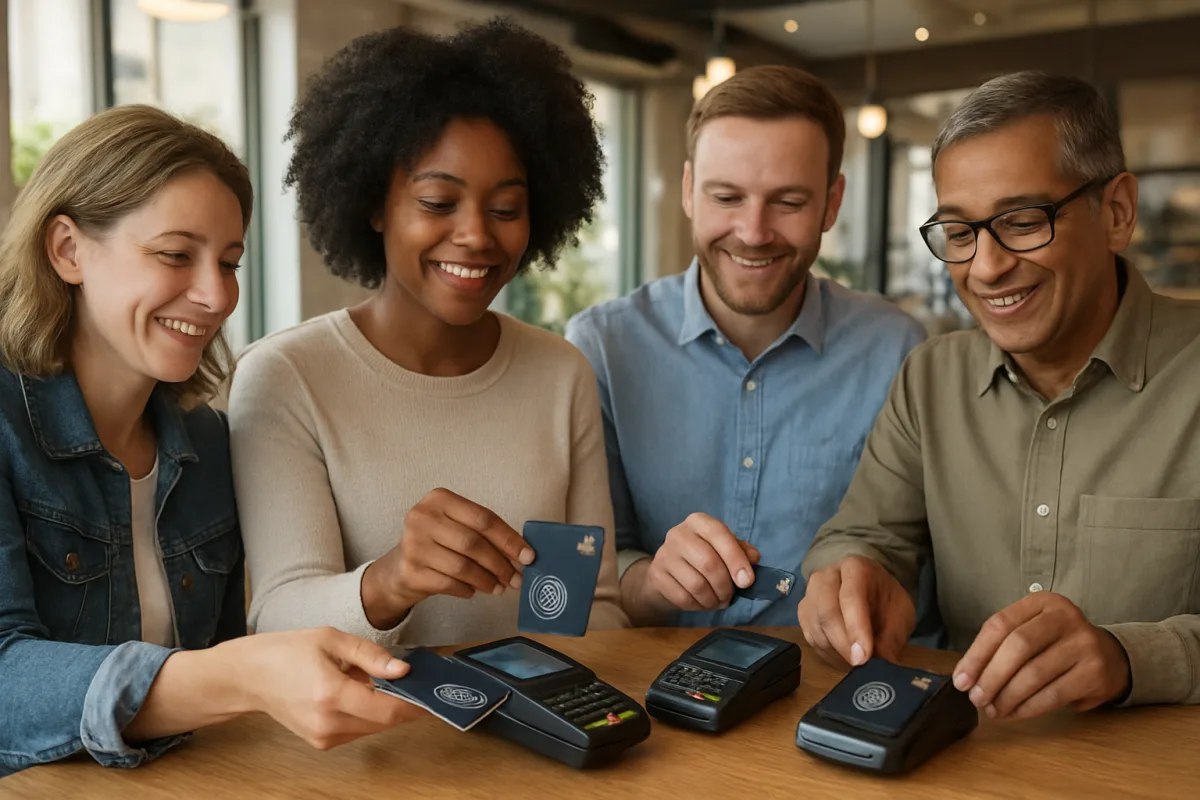
In a hypothetical retail environment with three checkout counters, biometric-enabled cards would process secure transactions more efficiently and safely than conventional chip or swipe cards. This improvement demonstrates that biometric cards deliver real-world benefits, both for cardholders and merchants.
Touchless Biometric Security versus Chip-and-PIN and Mobile Wallets
Touchless biometric credit cards introduce a sophisticated authentication process that enhances security compared to chip-and-PIN and even some mobile wallet systems. By using unique biological identifiers, touchless authentication verifies the cardholder’s identity without requiring physical contact or device-based login credentials. This makes it especially difficult for fraudsters to impersonate cardholders or make unauthorized purchases with stolen cards.
Unlike chip-and-PIN methods, which rely on a numeric code that can be memorized, observed, or shared, biometric identifiers are unique—and not easily replicated. While mobile wallets use strong safeguards such as tokenization and device-specific checks, their security depends on the software and hardware of the user’s phone, which can vary. A touchless biometric credit card places the authentication process directly on the card, adding an extra, hardware-based barrier to fraud.
These cards typically store encrypted biometric templates within a dedicated secure chip. Sensitive fingerprint or facial data never leaves the card, which neutralizes common attack methods like hacking external systems or intercepting data transmissions. Only when a valid biometric match is made does the card approve high-value contactless transactions. For example, if a card has a contactless purchase limit of $75 and a user attempts to spend $100, the card will require biometric authentication—ensuring unauthorized users are stopped in real time.
In summary, touchless biometric cards provide layered, hardware-based protections that integrate smoothly with existing payment systems, adding both convenience and increased security over conventional credit card options.
How Biometric Data Is Protected on Credit Cards
Concerns about the security of stored biometric data are common, but it is incorrect to assume this data is easily compromised on biometric credit cards. Biometric templates—like fingerprints—are securely saved on the chip within the card itself, so-called card-side storage. This design means the sensitive information never leaves the physical card and isn’t uploaded to external servers, which are more vulnerable to breaches.
Access to the biometric data is protected with strong encryption. Even if someone opens the card or accesses its hardware, deciphering the encrypted template would require sophisticated tools and keys specific to that device, further raising the level of difficulty for any would-be thief. Biometric verification always occurs locally, so the data isn’t exposed to wireless interception during transactions. For example, if a biometric card uses unique encryption keys for each device, unauthorized cloning or biometric data extraction becomes a highly unlikely scenario. In this way, biometric authentication on credit cards stands as a safeguard, rather than a weak point, in overall card security.
Biometric Security Aims to Streamline, Not Slow Down, Credit Card Payments
Biometric security in credit cards is designed to increase transaction speed and convenience. Touchless biometric authentication removes the need for entering a PIN or signing a receipt, allowing quick purchases much like conventional contactless cards. For users, the biometric check—such as a fingerprint scan—registers instantly and completes the transaction within moments, meeting consumer expectations for hassle-free payments.
The experience for cardholders is one of increased confidence and simplicity. Even in busy retail environments or self-checkout scenarios, biometric cards can streamline purchases rather than introduce delays. The ultimate goal is to create a system where stronger security does not come at the expense of usability or speed.
Biometric Security Will Become Widely Accessible to All Cardholders
Biometric security is not limited to premium cards or affluent users. While the earliest examples may have appeared on higher-end credit products, industry trends point toward widespread availability as biometric technology becomes more affordable and production increases. Financial institutions are actively working to incorporate biometric authentication into mainstream credit card offerings—including no annual fee cards and those designed for users with fair or rebuilding credit.
With broader deployment, the enhanced fraud protection and simplicity of biometric cards will reach users at all spending levels. For instance, consider a neighborhood shop where all three checkout lanes are set up for biometric card payments—reflecting how security enhancements can reach all customers without necessarily raising costs. In this way, biometric security is on track to become a standard feature that benefits the majority of cardholders, not just a select few.
How Biometric Credit Cards Could Transform Everyday Transactions
Biometric credit cards have the potential to make everyday transactions safer and more intuitive. Take the example of Sarah, a commuter starting her day by purchasing coffee using her biometric credit card. A simple tap and a brief fingerprint scan let her pay immediately, with no need for a PIN or signature—cutting down on wait times and providing extra security.
Later, at a grocery store, Sarah selects self-checkout and again simply taps the card and confirms her identity biometrically. Even moderate-value purchases are managed swiftly, and she never has to worry about forgetting a code or misplacing her phone. This use case demonstrates how biometric authentication makes spending not just more secure, but also smoother and less stressful for consumers.
By minimizing the risk that a lost or stolen card can be misused, biometric authentication can give users added confidence and reduce stress in daily finance. For further exploration of how innovative credit card features affect spending habits, consider this article on eco-friendly credit cards.
The Future of Biometric Security in Credit Cards: Touchless Authentication and Your Financial Protection
The future of credit card security is strongly aligned with biometric technology, especially touchless authentication. As adoption increases, the typical cardholder will experience faster, safer payments and less exposure to fraud. Touchless biometrics verify your identity through unique physical traits and store them safely within the card, reducing the risks associated with passwords, PINs, or even device-based security.
Growing demand for streamlined, secure payment solutions makes touchless biometrics a natural progression in credit card technology. These cards can replace cumbersome authentication requirements and lower fraud risk, all while fitting into the rapid pace of digital and contactless payment systems. In routine scenarios—such as a busy coffee shop where customers make sub-$50 purchases at multiple checkouts—touchless biometric cards expedite the process and add a meaningful layer of real-time fraud prevention.
As biometric features gain mainstream acceptance, consumers should consider how such advancements fit into their broader financial strategies, especially for building and maintaining strong credit. Useful guidance for combining new security features with responsible financial practices is found in resources like this guide on building credit fast with no annual fees and minimal spending. Touchless biometric authentication is set to play an integral role in securing personal finances, delivering both practical convenience and long-term protection for everyday credit card users.