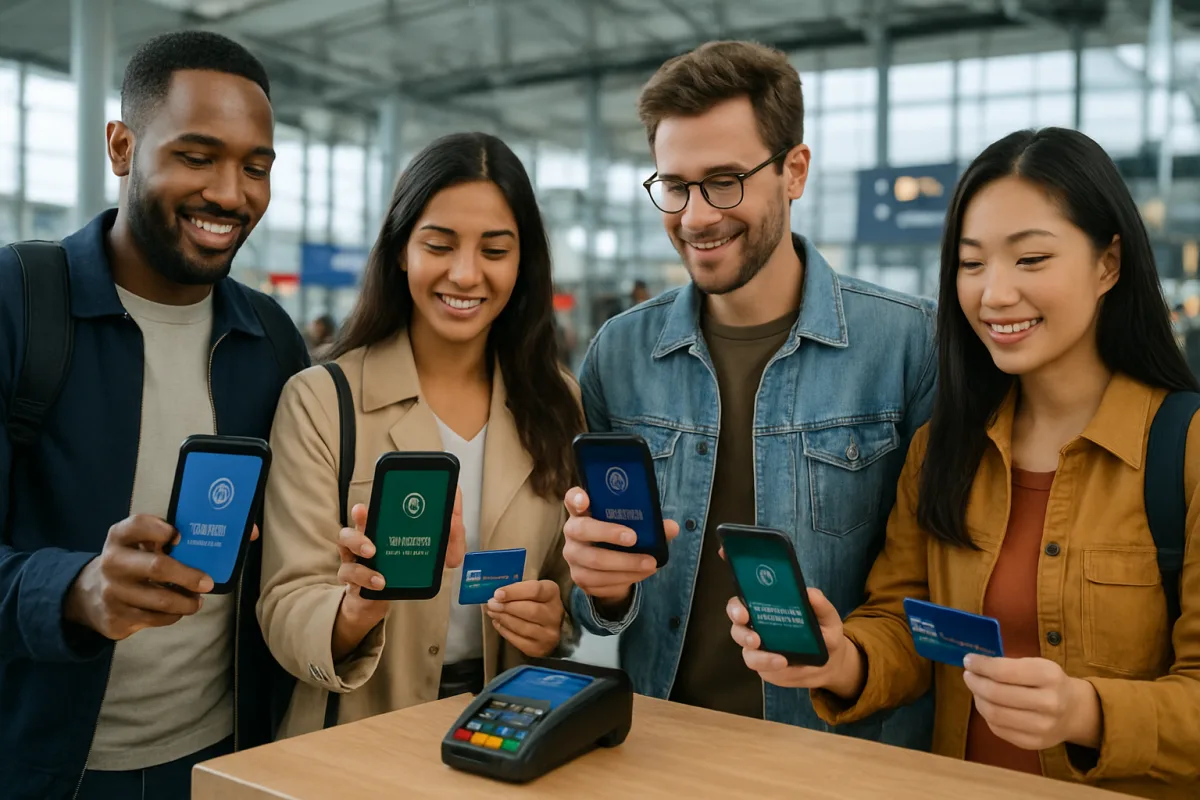
Airport Frustrations: Lily’s Struggle with Her Travel Card Abroad in 2026
Lily’s international trip in 2026 started with a frustrating issue: her travel credit card wasn’t working smoothly at the airport due to unexpected complications with digital wallets and contactless payments. Although she selected a travel credit card advertised for low foreign transaction fees and generous rewards, she quickly experienced confusion and payment delays while trying to purchase airport meals, arrange transportation, and handle currency exchange services.
Her expectation of simply tapping her card or using a preferred digital wallet app on her phone met unexpected obstacles. Certain merchants only accepted her credit card through their local digital wallet apps, demanding an extra verification step. Others allowed tap-to-pay with a card but declined digital wallet transactions from international accounts without warning, blocking some of her purchases. When the airport’s Wi-Fi was unreliable, payment authentication failed, and she was forced to improvise.
She also discovered that despite her card’s promise of zero foreign transaction fees, a hidden surcharge appeared because the payment processor categorized a contactless transaction as international. This inconsistency between her card’s marketing and how payments are actually routed abroad left Lily searching for backup payment options. She also saw expected rewards delayed or mismatched with the transactions, exposing further complications.
Lily’s experience underscores a new challenge for international travelers: navigating the interplay between travel credit cards, digital wallets, and diverse contactless payment standards around the world. Even with top-tier travel cards, a lack of preparation and understanding can lead to payment issues, hidden costs, and missed rewards.
Changing International Payments: Digital Wallets, Contactless Tech, and Global Card Acceptance
The international payment landscape for travelers in 2026 is defined by the rise of digital wallets and contactless payments, which now profoundly influence how credit cards are used overseas. Compatibility with digital wallets has expanded to include not only smartphones but also wearables like watches and rings. These rely largely on near-field communication (NFC) for fast, tap-to-pay transactions. Many travelers now expect quick, cardless payments, but actual convenience can be limited by differences in merchant tech and local acceptance rules.
Even with NFC-enabled payment terminals present in most major cities and airports, some regions and small businesses still depend on older systems, leading to declined payments or fallback to chip-and-PIN methods. International payment infrastructure is not uniform—where some destinations have made contactless the norm, others continue to lag, which affects the reliability of travel credit cards abroad. For instance, a traveler’s digital wallet might work seamlessly at a Paris department store yet fail at a kiosk in a remote tourist town.
Credit card issuers are updating products for better digital integration. Cards that support instant tokenization allow safer and faster digital wallet payments, cutting fraud risk. Still, not every travel credit card is compatible with digital wallets or accepted everywhere globally, which can cause confusion for those carrying multiple cards from different banks.
Blockchain innovations are also influencing the market, aiming to strengthen security and create new rewards opportunities, though widespread effects are still emerging. To better understand these changes, travelers can consult resources on the future of virtual credit cards and blockchain’s role in credit card security and rewards for practical insights as payment technology evolves.
From my perspective, travelers must recognize that digital wallet compatibility and merchant infrastructure will make or break their payment experience abroad in 2026. Preparing for variability, verifying card compatibility with local payment systems, and understanding limits of contactless acceptance are essential to avoid frustrating surprises during international trips.
For example, imagine a traveler at a busy airport café with three checkout lanes: two accept contactless payments from digital wallets without extra fees, while the third requires a chip card swipe that incurs a foreign transaction fee. Choosing the right payment method can immediately save money on each purchase, demonstrating the practical impact of digital wallets and contactless tech on both convenience and costs.
How to Prepare Your Travel Credit Cards for Global Digital Wallets and Contactless Payments
Preparing your travel credit cards ahead of an international trip is crucial in 2026’s rapidly changing payments landscape. Start by verifying that your credit cards are contactless-capable and recognized in the countries you’re visiting, especially where tap-to-pay or mobile payments dominate. Banks and card issuers differ in NFC and tokenization technology, so identifying cards that are compatible with global networks can prevent transaction failures.
Set up your digital wallet in advance. Load more than one travel card—ideally from different issuers—to your device’s wallet app, whether that’s Apple Pay, Google Wallet, or another platform. Enabling biometric security (fingerprint or facial recognition) boosts both speed and safety. Many modern travel cards issue virtual card numbers, which can layer extra security on unfamiliar payment terminals.
Notify your card issuers about your travel plans to reduce the likelihood of automatic fraud blocks. It’s also helpful to examine card fee structures—compare foreign transaction fees, exchange rates, and closely review travel rewards policies, since bonus categories and reward speeds may differ when abroad.
As an example, a traveler could keep one card with zero international fees and high contactless acceptance, and a backup card with robust insurance but a moderate transaction fee. This diversified setup helps you adapt payment strategy on the fly, minimizing expense and stress.
- Check that your travel credit cards support contactless payments and international NFC networks
- Add several cards to your mobile wallet for redundancy
- Turn on biometric authentication for your device
- Notify card issuers of your itinerary
- Compare fee structures and international rewards for each card
- Use virtual card numbers where available for added protection
Adapting On the Ground: Lily’s Day Navigating Payment Technology Abroad
Lily’s ongoing travel in 2026 illustrates how digital wallets, contactless payments, and varying local acceptance affect daily purchases. At a Parisian café, Lily uses her travel credit card through her phone’s wallet. While the café allows contactless payments, her secondary card (in a different wallet app) is not recognized, so she must switch to another option. The process adds brief delay, though not additional cost in this instance.
Later at a boutique, Lily tries a card’s contactless chip but the shop’s terminal only processes NFC phone payments, not card tap. When her phone wallet succeeds, it highlights the value of having multiple payment modes enabled.
Along the way, Lily tracks both fees and rewards. Her primary card applies a currency conversion charge, reducing her net rewards, while her backup doesn’t charge international fees but offers slightly lower rewards. Deciding between them on the spot means weighing costs against points earned, which can substantially affect the value gained from travel credit cards abroad.
Not all vendors accept contactless cards or wallets—some markets and stalls still require cash or chip insert transactions, making it necessary to carry some local currency for small expenses.
Example: Suppose Lily wants to make a €50 purchase at a museum gift shop that only allows NFC-based digital wallets, but her main card’s wallet is temporarily down. She switches to her backup card’s wallet, completes the transaction, and avoids both a currency fee and missed points that would have occurred if the purchase had gone through her main card. This adaptability saves time and money, and keeps her rewards intact.
Lily’s day shows that keeping several credit cards ready in digital wallets, understanding what each card is best for, and knowing how to respond to limited acceptance are critical to maintaining convenience and maximizing benefits during global travel.
Best Practices: Choosing and Managing Travel Credit Cards for Evolving Payment Systems
To keep up with how digital wallets and contactless payments shape travel in 2026, prioritize a flexible, multi-layered payment strategy. Always have more than one travel credit card stored in your preferred mobile wallet—each with different networks or features—to address patches of inconsistent acceptance. Activate advanced security such as biometrics and real-time alerts to protect against evolving fraud threats that accompany faster payment tools.
From my experience, carrying at least one travel credit card with no foreign transaction fees, combined with a trusted backup physical card, is essential. Travelers should periodically review issuer policies and explore emerging eco-conscious cards to align spending with sustainability—a trend gaining traction that may influence rewards and card features. For more on these options, check out this detailed guide on sustainability trends shaping credit card rewards here.
If you encounter a merchant who doesn’t accept wallet payments or charges extra for card-not-present transactions, a backup plastic card keeps purchases moving and avoids high fees. Ultimately, adaptability and forethought are key to successful international payments as systems evolve quickly.
Key Industry Shifts: Travel Credit Card Features and Payment Personalization in 2026
The travel credit card world in 2026 is seeing more digital wallet integration and contactless technology than ever before. Faster, more secure transactions are now the norm, but these also introduce additional layers of complexity, such as occasional acceptance issues and variable conversion costs. Card issuers respond by building in easier wallet compatibility and offering personalized rewards that increasingly adapt to traveler behavior. Travelers who adjust by adding multiple cards to their digital wallets, checking merchant acceptance, and staying updated on evolving rewards programs put themselves in the best position to earn and save more on every trip.
From my experience, success abroad hinges on flexibility—diversifying payment options and leveraging personalized rewards can transform potential payment hassles into convenient savings and value.
Keeping current on these shifts and revisiting your card lineup regularly lets you sidestep disruptions and maximize your credit card’s benefits wherever you travel. If you want to know more about behavioral data and personalized rewards, see this practical guide: how credit card companies use behavioral data to personalize your travel rewards.
Travel Payment Readiness Checklist for 2026
To ensure seamless travel payments with credit cards and digital wallets, review these essentials before your next international trip:
- Verify all your credit cards support international contactless and digital wallet payments.
- Add multiple travel cards to your mobile wallets for wider network and regional compatibility.
- Notify your card issuers about your travel dates and destinations to prevent declines.
- Understand the structure of any foreign transaction fees or dynamic conversion offers attached to each card.
- Enable biometric security and real-time alerts for added payment security.
- Certain transactions or locations may still require traditional payments; keep at least one physical backup card ready.
In my experience, preparing with both digital and physical payment options is key to adapting smoothly to evolving international payment environments.